
Is Your DAM Vendor Ready for DORA Compliance in 2026?
Last updated
16 Sep
2026
By
Steffin Abraham
Duration
x
min
Published on
16 Sep 2026
By
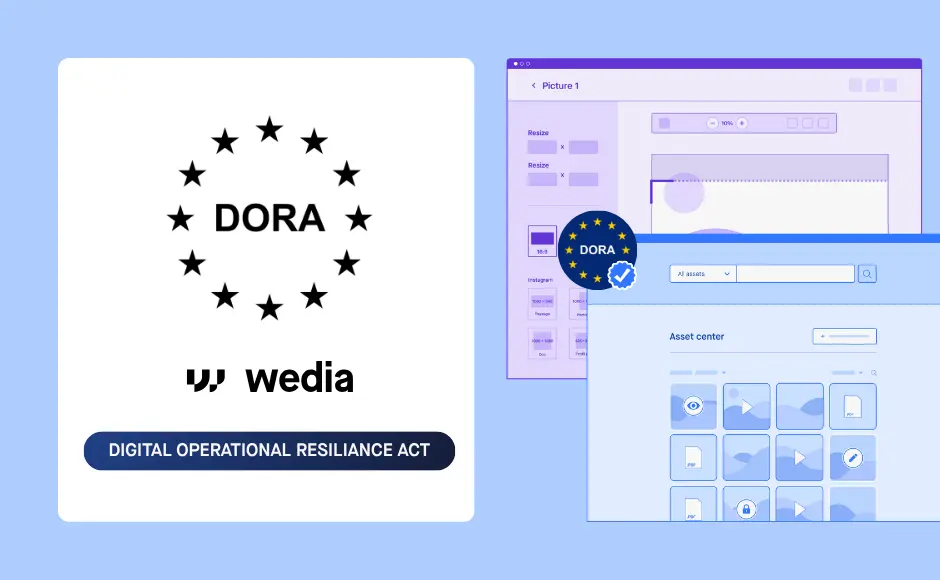


If you work in banking, insurance, asset management, or payments, you've felt this. Every tech vendor gets vetted, audited, and re-vetted.
Since January 17, 2025, the Digital Operational Resilience Act (DORA) has made that vetting a legal requirement across the EU. That list goes well beyond banks and insurers. It extends to investment firms, payment providers, crypto-asset firms, pension funds, credit rating agencies, and more, plus every ICT vendor that serves them. If your company touches financial services in any regulated capacity, DORA probably touches you too.
And it reaches every technology vendor in the chain, including the ones managing your content.
That's a real problem when your DAM vendor can't answer those questions fast.
Content is more than files in a library. It's your Brand DNA, the identity that shows up everywhere your brand does. When a regulator asks whether your systems can survive a disruption, they're really asking whether that identity, and the trust your customers place in it, stays protected no matter what happens to the infrastructure behind it.
Here's what DORA actually asks for. Financial entities must demonstrate they can withstand and recover from a technology disruption. That means vetting vendors' security posture, building specific clauses (audit rights, incident cooperation, exit plans) into every contract, and keeping an ongoing register of who they rely on and why.
For a vendor like Wedia, there's no single certificate to earn. DORA compliance works differently. It means being ready with the documentation, security posture, and contract terms a regulated client's compliance team will ask for, before they ask.
Here's how we handle it. Lyvio's governance is brand safe by design, built into the product itself, from day one. We hold ISO 27001, TISAX, and GDPR compliance as a baseline, and we've aligned our practices with DORA's requirements too. When your compliance team sends over the questionnaire, we already have the answers ready.
Trust isn't one certificate. It's a habit, built into how Lyvio works every day. Every asset that moves through the platform gets checked before it goes live, tracked afterward, and tied to a clear record of where it came from and how it was used. That's not a compliance step someone adds at the end. It's how the product works, whether or not a compliance team happens to be watching that day.
That habit is what makes it easier to say yes to DORA, and to whatever comes after it. The infrastructure underneath already handles more than 30 billion visuals a month in production, so this isn't new territory being tested for the first time. Right now, the trust assurance stack looks like ISO 27001, TISAX, GDPR, and alignment with DORA. Regulations will keep evolving. The discipline behind protecting your Brand DNA doesn't have to start over each time one does.
If you're evaluating DAM vendors for a regulated environment, that's one less thing on your list with Wedia.
Key Takeaways
- Since DORA became binding across the EU on January 17, 2025, Wedia has already met what it asks of DAM vendors: ISO 27001, TISAX, and GDPR compliance as a baseline.
- Lyvio's governance runs natively through every workflow, so audit trails and incident-ready documentation exist before a regulator ever has to ask for them.
- Behind that platform sits a dedicated Customer Success Manager, ready to walk your compliance and IT teams through documentation and security questionnaires.
- Regulation will keep evolving, and Wedia's trust assurance stack is built to scale with it rather than restart from zero each time.
- DORA reaches every ICT vendor serving banks, insurers, investment firms, and payment providers, which is exactly why Wedia treats compliance readiness as routine, not a fire drill.
Frequently Asked Questions
Q: What is DORA and who does it apply to?
A: DORA, the EU's Digital Operational Resilience Act (Regulation 2022/2554), applies to banks, insurers, investment firms, payment providers, crypto-asset firms, pension funds, credit rating agencies, and the ICT third-party providers that serve them. Wedia falls into that last category, which is why its platform is built to meet the same bar as the financial entities it supports.
Q: Since when has DORA been in force?
A: DORA has been binding across the EU since January 17, 2025. Wedia aligned its practices with the regulation ahead of that date, so financial services clients weren't left waiting on a vendor to catch up.
Q: Does DORA apply to marketing and content management vendors, or only core banking systems?
A: DORA covers any ICT third-party provider supporting a financial entity's critical or important functions, and a DAM platform that manages brand content, campaign assets, and customer-facing communications qualifies. That's why Wedia treats resilience as a product requirement, not a marketing checkbox.
Q: What does DORA require in vendor contracts?
A: Financial entities need audit rights, incident cooperation clauses, exit plans, and an ongoing vendor register built into every ICT contract. Wedia's documentation is structured to support exactly that register from the start of a relationship, not assembled after a request comes in.
Q: How is DORA different from GDPR?
A: GDPR governs personal data protection, while DORA governs the operational resilience of the systems and vendors supporting financial entities, covering incident response, testing, and third-party risk. Wedia maintains both, since data privacy practices and operational resilience get evaluated separately by compliance teams.
Q: What certifications should a DAM vendor hold to support DORA readiness?
A: ISO 27001 for information security management, TISAX for cross-industry security recognition, and GDPR compliance for data protection form the baseline regulators expect. It's the same baseline Wedia holds before any DORA-specific conversation even starts.
Q: How does a DAM platform's governance model relate to DORA?
A: DORA asks whether a vendor's systems and processes can be trusted to hold up under disruption. Wedia builds that governance, meaning permissions, rights management, and audit trails, directly into Lyvio rather than bolting it on afterward, which gives compliance teams a faster answer than a vendor retrofitting controls.
Q: What should a compliance team ask a DAM vendor before signing a contract?
A: Ask for current ISO 27001, TISAX, and GDPR documentation, evidence of incident notification processes, data recovery testing frequency, and exit terms. A vendor that produces this quickly is signaling that resilience runs day to day, not just at audit time, and it's the exact process a dedicated Customer Success Manager walks new Wedia clients through.
Q: Does a DAM vendor only need the right technology, or does support matter for DORA too?
A: Technology alone doesn't satisfy DORA. Regulators also look at how a vendor responds when something goes wrong, which is why Wedia pairs its certified platform with human-centric consulting: dedicated experts guide clients from onboarding through ongoing optimization, and proactive monitoring flags issues before they affect daily operations.
Q: What kind of ongoing support should a financial services client expect from a DAM vendor?
A: Look for a named point of contact rather than a support ticket queue, someone who understands your compliance requirements as they evolve. That's the model Wedia uses: dedicated experts stay with clients from onboarding through ongoing support, backed by SLA-based response commitments for security questionnaires and incident cooperation.
Q: What happens if a financial entity's ICT vendor cannot meet DORA requirements?
A: A financial entity remains responsible for its own DORA compliance even when a vendor falls short, so gaps in a vendor's security posture become the financial entity's regulatory risk. Vendor due diligence and contractual safeguards are a standing requirement now, which is exactly the gap Wedia's baseline certifications are designed to close.
Bottom Line
DORA extended EU regulatory scrutiny to every ICT vendor touching the financial sector, and DAM providers sit squarely inside that scope. Financial entities need a vendor that can produce audit-ready documentation, contract-ready terms, and governance built into daily operations rather than assembled for a review, backed by people who respond when a regulator calls. That's what Wedia offers: Lyvio holds ISO 27001, TISAX, and GDPR compliance as a baseline, aligned with DORA, paired with dedicated experts who prepare the answers before your compliance team has to ask.
See How Wedia Supports DORA-Ready Content Governance
See how Wedia helps regulated financial brands protect their Brand DNA while meeting evolving compliance standards like DORA.
Articles you may find interesting


Get more marketing tips
& news straight to your inbox


Wedia’s Digital Asset Management journey began in 2010.
Through Lyvio, its AI-native DAM platform, Wedia is part of the Top 10 DAM vendors worldwide, the Top 5 in Europe, and Number 1 in France.


