
Explore Digital Eco-Design: master best practices and uncover a game-changing DAM!
Last updated
31 Jan
2026
By
Bella Foxwell
Duration
x
min
Published on
31 Jan 2024
By
Bella Foxwell


A major challenge for organizations today is how to minimize the environmental impact of their expansive digital strategies. With digital technology now responsible for 4% of global greenhouse gas emissions, commitments to sustainability have become a business necessity.
A recent Deloitte survey found that more than half of Gen Zs (55%) and millennials (54%) say they research a company’s environmental impact and policies before accepting a job from them. Six in 10 Gen Z and millennials are willing to pay more for sustainable products and services.
Fortunately, there is a solution. Eco-design can change the way organizations deal with digital assets—not just to minimize the impact that thousands of terabytes of data has on the planet, but to make digital storage more efficient and effective.
In our recent webinar, Wedia’s CTO Olivier Grenet, illuminated the transformative role of eco-design in advancing a brand’s commitment to sustainability while improving their operational efficiency. This article delves into the key insights from the webinar and why Digital Asset Management (DAM) is a natural ally to every eco-design strategy.
Getting a Clear Picture of Our Existing Digital Impact
Sustainable SaaS design is about making conscious choices that align with our environmental values, without compromising on robustness and quality. Too often, the environmental impact of software is overlooked or underestimated due to its intangible nature. Throwing away an unused piece of (physical) paper will feel to most people much worse than leaving multiple duplicates of an asset lingering in their hard drive.
However, if we look at the hardware that enables our digital experiences, we can see how resource intensive seemingly small components actually are. The same is true for the 328.77 million terabytes of data generated each day.
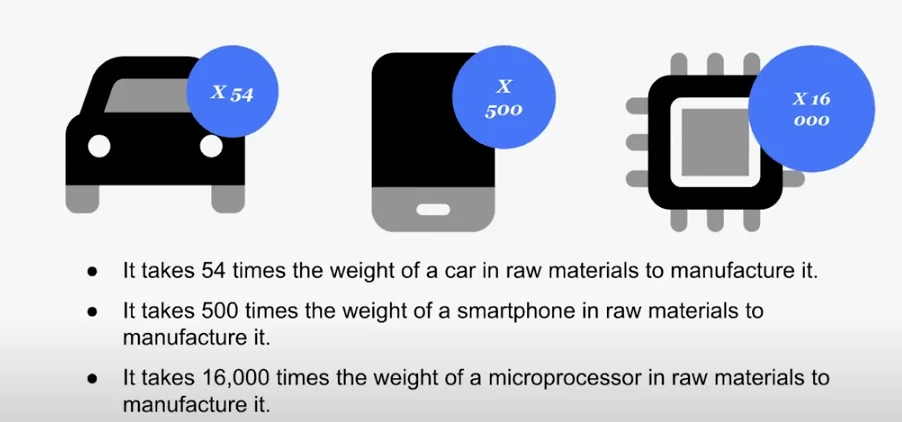
This is why it’s so important to get a clear picture of our carbon footprint and start measuring our digital impact. Once we know what data and processes are gobbling up the most carbon, we can zoom out and start understanding what changes we can make.
Measuring Our Digital Impact
So, how can organizations go about measuring their digital impact?
An open source tool like Cloud Carbon Footprint offers invaluable insights. Tracking resource usage and CO2 emissions, it provides a comprehensive view of an organization's digital environmental footprint over time. Actionable recommendations for AWS and Google Cloud are given to help reduce cost and carbon emissions, as well as projected savings and real world impact in trees planted.
Another technology worth mentioning is Cloud Jewels, developed by online marketplace Etsy. This open-source sustainability tool helps brands understand how cloud computing contributes to their overall energy use. By quantifying this usage, companies can make more informed decisions about their digital infrastructure. Etsy is using Cloud Jewels to meet its goal of reducing energy intensity by 25% from 2020 to 2025.
With a clear picture of how data is being used, companies should start with the easy wins—the low hanging fruit:
- Choose hardware wisely and turn off servers that aren’t being used
- Make sure server capacity is optimized and use tools to help distribute the load between servers efficiently
- Eliminate obsolete data that’s taking up space and consuming energy
- Use less energy intensive storage solutions for data that is rarely accessed
These might sound like small steps, but they’re huge in the world of eco-design.
Implementing an Eco-Design Philosophy
Committing to eco-design isn’t just about making a series of one-off changes. It’s about embedding environmental considerations into every stage of product and service development. In this way, eco-design is less of a strategy and more of a philosophy.
This philosophy dictates a judicious approach from the outset, ensuring that each feature, resource and line of code is essential to the functionality of the final product.
See This in Action: The Journey of an Image within DAM
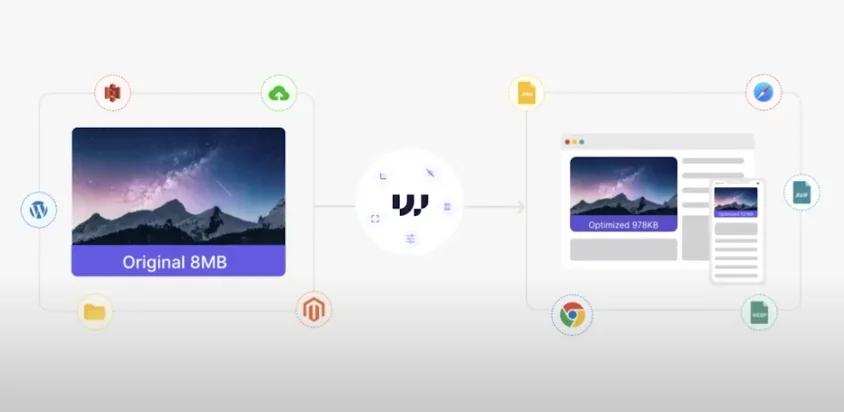
The lifecycle of an image in a DAM system is testament to the efficacy of eco-design. From choosing energy-efficient storage like solid state drives (SSDs) over traditional hard disk drives (HDDs) to optimizing server utilization and minimizing data transfer, every step is guided by sustainability.
The journey culminates in delivering optimally compressed and resized images, ensuring high quality with minimal environmental impact. What starts out on the left-hand side as a very large 8MB file (e.g. a PSD file) ends up being an image resized to the exact dimensions required by the user and the various channels they’re using (e-commerce, website, social media, etc.).
Navigating Legislative Frameworks and Standards
In a mission to embrace a sustainable way of managing digital assets, it’s important to have a solid plan in place. Government-backed legislation can help guide organizations in this area. For example, legislative frameworks like RGESN (Référentiel général d'écoconception de services numériques or General eco-design guidelines for digital services) in France, which focuses specifically on eco-design.
RGESN has a compliance score which helps organizations identify areas where they’re excelling and crucially, where they can improve. Tracking this score over time, companies can measure the effectiveness of eco-design initiatives they implement. One change they can make to improve their score is to implement a DAM system.
A Look Inside the Lyvio Dashboard
To see how a DAM system like Lyvio can support an organization’s sustainability efforts, let’s take a look inside the dashboard.
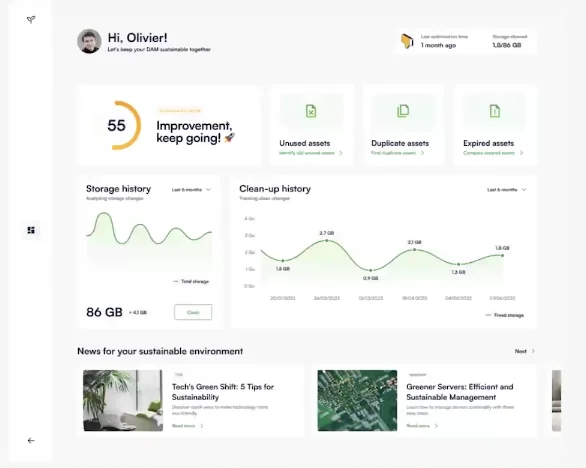
As you can see, users are given a sustainability score and actionable insights to enhance environmental efficiency. For example, removing unused, duplicate or expired assets, which directly impacts the sustainability score and demonstrates the tangible benefits of eco-design.
If the user clicks into ‘Unused assets’, Lyvio will then scan the system and list all the assets that haven’t been accessed for some time. With the help of filters, users can ensure they clean up the right files and once finished, celebrations are in order!

In this instance, 423 MB of storage has been cleared, which equates to all 8 Taylor Swift albums! And the user’s sustainability score has jumped from 55 to 76.

Watch Out for the Rebound Effect
The ‘Rebound Effect’ is what happens when increased efficiency leads to higher resource consumption elsewhere. For example, Generative Artificial Intelligence. This is an amazing technology that helps us in so many ways, but it uses a huge amount of server power and storage, so we must be careful or else we’ll end up increasing our carbon footprint.
The same goes for high-resolution video formats like 4K and 8K. They’re beautiful to look at, but we must ask ourselves whether the huge amounts of power and storage required to process these kinds of files for social media is really necessary.
That’s what it means to adopt an eco-design mindset. It’s all about balancing the allure of new technologies like these with their environmental implications. While we’re always striving to improve customer experiences, we mustn’t do so at the expense of our planet.
Advance your sustainability efforts with DAM
As Olivier Grenet points out in the webinar, digital eco-design isn’t simply a trend. It’s an essential shift in how we approach sustainability, weaving environmental considerations into every aspect of a company’s products and services.
From the initial design stage to the final user interaction, eco-design in DAM systems like Lyvio plays a pivotal role in reducing the digital world’s carbon footprint. By adopting these practices, organizations can not only enhance their operational efficiency but also contribute significantly to a more sustainable future.
Discover the value of eco-design in technology and how we are using it to fuel more sustainable products in our recent webinar.
Key Takeaways
- Digital technology accounts for 4% of global greenhouse gas emissions, making eco-design a strategic priority.
- Implementing a DAM system enables automatic asset optimization and significantly reduces data transfer requirements.
- Quantifying digital impact through tools like Cloud Carbon Footprint is essential for data-driven sustainability strategies.
- Regular system audits to remove duplicate or unused assets directly improve an organization's environmental efficiency score.
- A digital eco-design philosophy balances the use of advanced technologies like AI with their resource consumption.
Frequently Asked Questions
Q: What is digital eco-design?
A: Digital eco-design is a methodology used to create digital services and products that minimize environmental impact throughout their lifecycle. It focuses on reducing energy consumption, optimizing data storage, and ensuring hardware longevity for a global brand.
Q: How does a DAM system help with sustainability?
A: A DAM system centralizes assets to eliminate duplicates and uses automated tools to compress and resize media. This reduces the amount of data stored and transferred across a large-scale organization, lowering the total carbon footprint.
Q: What is the RGESN framework?
A: The RGESN is a set of general eco-design guidelines for digital services. It provides organizations with a structured way to measure and improve their environmental performance through a standardized compliance score.
Q: What is the rebound effect in digital technology?
A: The rebound effect is when the energy savings gained from a new technology are offset by increased usage or the adoption of more resource-heavy features. For example, using AI to create more content can sometimes increase a carbon footprint despite improved efficiency.
Q: Why is Gen Z interested in a company's environmental policy?
A: Younger professionals prioritize environmental responsibility as a core value. Most Gen Z and millennials research a potential employer’s sustainability practices before accepting a job offer or purchasing their products.
Q: How can I measure my organization’s cloud carbon footprint?
A: Global organizations can use open-source tools like Cloud Carbon Footprint or Etsy’s Cloud Jewels. These solutions integrate with major cloud providers to quantify energy usage and provide recommendations for emission reductions.
Q: Is SSD storage better for the environment than HDD?
A: Yes, Solid State Drives (SSDs) are generally more energy-efficient than traditional Hard Disk Drives (HDDs). Using SSDs in your infrastructure helps reduce the total power required for data storage and retrieval.
Q: Can a DAM help with legislative compliance?
A: A DAM system provides the tracking, reporting, and optimization tools necessary to meet various digital sustainability standards. It helps a multinational organization prove its adherence to eco-design principles during audits.
Bottom Line
Digital eco-design is an essential shift in how global brands approach technology and sustainability. By integrating these practices into a centralized DAM system, organizations can lower their carbon footprint while significantly enhancing their operational efficiency.
Call to Action
See how Wedia helps global brands solve digital sustainability challenges. Book a personalized demo to explore our environmental efficiency tools.
Articles you may find interesting


Get more marketing tips
& news straight to your inbox


Wedia’s Digital Asset Management journey began in 2010.
Through Lyvio, its AI-native DAM platform, Wedia is part of the Top 10 DAM vendors worldwide, the Top 5 in Europe, and Number 1 in France.


